How I Turned Fear of Being Alone Into Planned Solo Dates
There was a stretch of my life where the idea of a dinner for one felt like a public confession of failure. If a friend cancelled, I invented a backup plan that involved nobody: a takeaway container eaten on the couch, a film watched with the subtitles off, a shower long enough to fill an evening. I had reasons, of course — low energy, a rough week, nothing decent to wear — but the truth underneath was simpler. I was afraid that being alone meant I had been passed over. That empty space across the table felt less like freedom and more like evidence.
That fear has not been dismantled by a single revelation or a gratitude journal. It loosened slowly, in the specific and unglamorous way most of my changes have: by treating aloneness as something to practise rather than a verdict to endure. Now I plan solo dates — coffee, a gallery, a swim, a long walk home — and the same nervous flutter still shows up before them. It just no longer gets the final word. I keep the longer version of this story on Life Starts With Coffee, the coffee-fuelled corner where I write about mental health, identity and growing older in public.
The Fear Was About Disappearing, Not Solitude
Look closely at what frightened me and it was never the empty room itself. I could sit alone for eight hours writing. I could spend a whole Sunday in my flat without hearing another human voice and feel content. The panic arrived when alone-ness became visible: eating in a restaurant by myself, standing on a platform with nobody beside me, telling a taxi driver where I lived. Solitude was fine when it stayed private. It became unbearable the moment it looked like a lack of plans.
| How I used to read being alone |
How I read it now |
| Cancelled plans were evidence I had been unchosen |
A cancellation is information, and I make my own plans |
| The empty chair opposite felt like a verdict |
The empty chair is space I can take up without apology |
| I needed another person to confirm I was worth keeping company with |
I am learning to be my own company |
| Saturdays meant avoidance and endless scrolling |
Saturdays hold a café, a film, a walk with a destination |
| An empty flat was a failure state |
An empty flat is a pause between plans |
Reading those two columns side by side is useful, though I want to be honest about the messy middle. Some nights the old story still wins. A cancelled plan lands, and I am twelve again, convinced I have been excluded from something life-sized. What changed is that I have gathered evidence against that story, one ordinary Tuesday at a time, and the evidence says I am still here, still worth the company of people I choose.
I started calling these outings solo dates because the phrase borrows the rituals of romance without the performance of it. It suggests attention: a destination, a bit of effort, a deliberate intention to enjoy something. The wording matters more than it sounds. "I am having dinner alone" sounds like leftover circumstance. "I am having dinner with myself" sounds like a decision I made this morning and wrote into my calendar.
Safety, Support and the Help I Actually Found
I want to be careful here, because the fear of being alone never lived in isolation from other fears. For years it braided through social anxiety, the wreckage of a relationship that ended badly, and a general distrust of being noticed. None of that disappears because I have decided to enjoy an afternoon at the cinema on my own.
What helped was unglamorous support. In Australia you can see a GP, ask for a Mental Health Treatment Plan, and be referred to a psychologist whose sessions are covered by Medicare, in person or by telehealth when travelling to a clinic feels like too much in itself. If anxiety or depression has been significant for long enough, you can also ask about an assessment for the National Disability Insurance Scheme for psychosocial disability. I did that paperwork slowly, over months, with my psychologist reading each form back to me before I signed it.
There is a legal layer too, and knowing where it sits made a measurable difference. Unwanted messages and doxxing sit within the Australian Privacy Principles overseen by the Office of the Australian Information Commissioner, unwanted calls can be listed on the Do Not Call Register, and both NSW and Victoria allow protection orders against harassment and threats. If any situation turns urgent, calling 000 or reaching Lifeline on 13 11 14 works whether or not I planned to be alone that day. None of this is glamorous, and all of it is what turns vague dread into something I can plan around.
The practical habits mattered as much as the paperwork. I let a housemate know which suburb I am in before I walk home. I book the 7:10 train rather than the last one. I keep my phone charged in my hand, not buried in a bag, when I am somewhere new. Safety planning gave me a way to be alone outside without pretending I am invulnerable.
What a Solo Date Actually Looks Like
A solo date is not a consolation prize. It has a beginning, a middle and an end, and it deserves the same thought I used to give to plans with friends. The café I choose has a window seat, not a communal bench. The film I see is one I would actually recommend. The walk has a destination, because aimless wandering with nowhere to be is how a day quietly turns into a day spent in bed.
Here are the details that make it work:
- Book the spot for one out loud, so the staff know and I do not feel like an afterthought walking in alone
- Choose somewhere with a window, a quiet corner and a table that is genuinely mine for the hour
- Put the phone in the bag on arrival and let the first ten minutes be unassisted
- Bring something to read, even if it stays closed in the bag, because the option changes the feeling
And here is what I have stopped apologising for:
- Buying one bunch of flowers at the market because I felt like it, not because it was someone's birthday
- Taking the slow route home on the tram rather than the fastest one
- Eating the whole theatre snack without pretending to share it
- Letting an afternoon end without sending a message to anyone at all
The coffee is not an indulgence bolted onto the edge of the day. It is the centre of it, the anchor that keeps everything else from blurring. I have written about why in my piece on coffee breaks as self-care, which is the argument I needed before I could sit down with a flat white and nothing to do but drink it slowly.
Local geography helps more than any mindset shift. Melbourne's laneway cafés make it easy to sit alone without feeling conspicuous, especially if you claim a window seat rather than a communal one. In Sydney, a ferry ride to Manly or a walk through the Botanic Garden gives a solo date a natural arc, and the Opal card means I do not have to calculate a fare to decide whether I am staying out longer. When Brisbane hits forty degrees in January, a solo date becomes the air-conditioned reading room of a public library, or a swim, or simply the walk between two cafés. A quick run to Woolworths or Coles for deli sandwiches, good coffee and a single-serve dessert counts, and it counts properly.
Planned Solitude Is a Feminist Practice
I stopped thinking of solo dates as a personal quirk once I noticed how much social labour sits behind the assumption that being alone is a failure. Women are taught to be available. We arrange the venue, hold the spare ticket, remember which friend has a new job, keep the group chat alive, and absorb the quiet shame of being the one who never cancels. Choosing to be alone on purpose takes that labour off other people and gives it back to me, and I am not interested in apologising for the space I reclaim.
The mental health arguments and the justice arguments have never been separate for me, and the longer I sit with that, the more I lean on my own notes about justice and mental health. Structural conditions produce isolation. Long shifts, insecure work, disability, caring responsibilities, the cost of housing near a city centre, and the violence that pushes some people away from family all make living alone a consequence rather than a preference. Victorian legislation has been moving in the same direction with the Mental Health Act 2022, which replaced the old Act and put consumer choice and lived experience at the centre of treatment planning. Access matters here in the ordinary ways too: a venue with an accessible bathroom, seating that does not require standing for twenty minutes, a quiet room instead of a loud front bar.
Queer and bisexual friendships taught me something the wider culture still gets wrong. Chosen family is real family, and a table for one is not a table for nobody. For some of us, solitude is the safest place we have ever had. For others, it is the first thing we learn to dread. Planned solitude respects both, because it is deliberate, chosen and revisable, unlike the loneliness that comes with a diagnosis, a rent increase or a locked door.
The Saturday I Have Set Aside
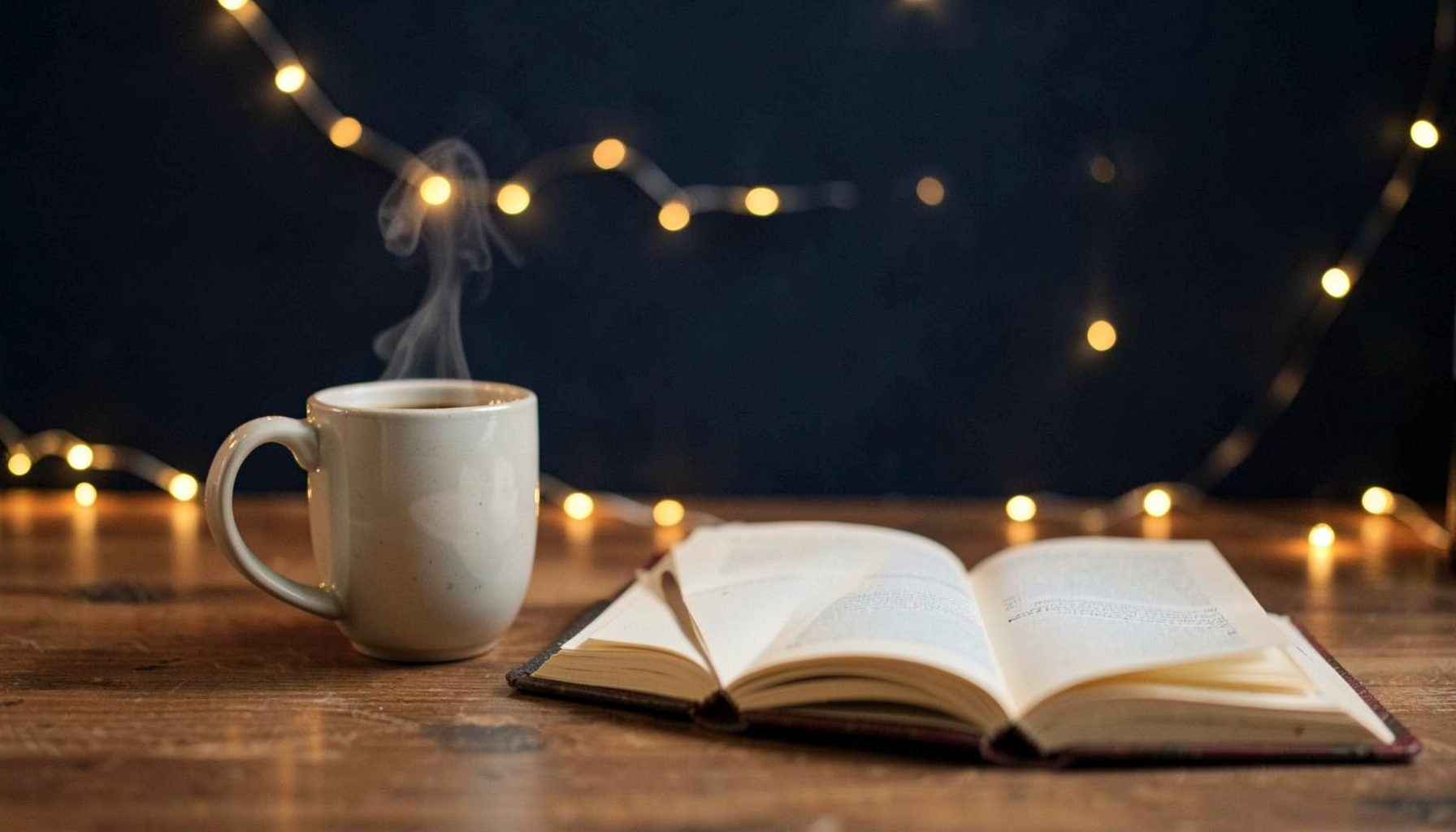
This week I did something I would have avoided a year ago. I booked the ten-thirty table at the café near the tram stop, told the friend I was cancelling on that I had already made plans, and then sat down with a long black and my book. The first four minutes were awful. I checked my phone twice, convinced someone had cancelled on me. By the sixth minute I had read a page. By the time the coffee went cold I had finished three chapters and made a list of things to do that week, and I had done all of it alone.
The nervous flutter still turns up, and I expect it will keep turning up. What has changed is that I now answer it with practice rather than retreat, and that the practice has a calendar entry behind it.
Tomorrow afternoon, at four o'clock, I am meeting myself at the tram stop on Collins Street, where I will take the tram to the gardens, sit on the first bench in the sun and read until the light goes.